 THE UNIVERSITY OF CHICAGO


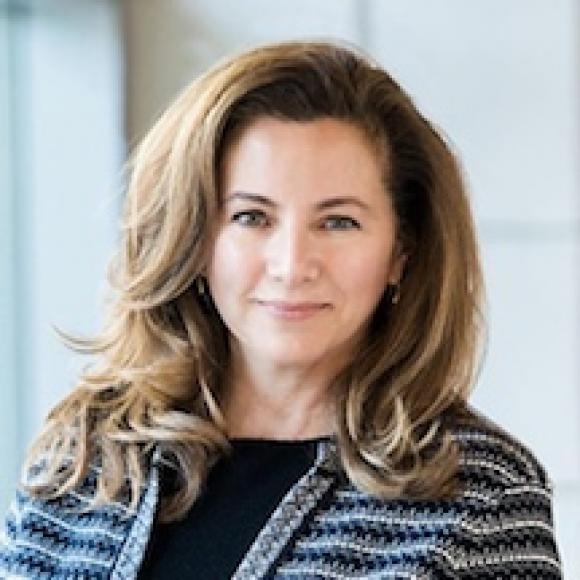
Ariel Kalil is a Professor in the Harris School of Public Policy. At Harris, she directs the Center for Human Potential and Public Policy and co-directs the Behavioral Insights and Parenting Lab. Professor Kalil is a developmental psychologist who studies economic conditions, parenting, and child development. Her current research examines the historical evolution of income-based gaps in parenting behavior and children’s cognitive and non-cognitive skills. In addition, at the Behavioral Insights and Parenting Lab, she is leading a variety of field experiments designed to strengthen parental engagement and child development in low-income families using tools drawn from behavioral economics and neuroscience. Kalil has received the William T. Grant Foundation Faculty Scholars Award, the Changing Faces of America’s Children Young Scholars Award from the Foundation for Child Development, the National Academy of Education/Spencer Postdoctoral Fellowship, and in 2003 she was the first-ever recipient of the Society for Research in Child Development (SRCD) Award for Early Research Contributions. Her current work is funded by NIH and by a number of private foundations.
Recent Research / Recent Publications
Kalil, A., Liu, H., Mayer, S., Rury, D., & Shah, R. A digital library for parent-child shared reading improves language skills for young disadvantaged children. In press, European Economic Review.
Bresciani, D., Kalil, A., Liu, H., Mayer, S., & Shah, R. Boosting young children’s math skill with technology in the home environment. In press, Economics of Education Review.
Bresciani, D., Kalil, A., Michelini, M., & Shah, R. (2025). What drives educational technology adoption in classrooms serving young children? Evidence from two experiments. Economics Letters, 257, Article 112680.
Shah, R., Kalil, A., & Mayer, S. (2025). Engaging parents with preschools: Evidence from a field experiment. Applied Economics. Advance online publication.
Duckworth, A. L., Ko, A., Milkman, K. L., Kay, J. S., Dimant, E., Gromet, D. M., Halpern, A., Jung, Y., Paxson, M. K., Zumaran, R. A., Berman, R., Brody, I., Camerer, C. F., Canning, E. A., Dai, H., Gallo, M., Hershfield, H. E., Hilchey, M. D., Kalil, A., . . . Bulte, C. V. (2025). A national megastudy shows that email nudges to elementary school teachers boost student math achievement, particularly when personalized. Proceedings of the National Academy of Sciences,122(13), e2418616122.
Corman, H., Dave, D. M., Kalil, A., Schwartz-Soicher, O., & Reichman, N. E. (2025). Effects of welfare reform on maternal engagement and involvement with young adolescents. Journal of Marriage and Family, 87(3), 1130-1152.
Kalil, A., Mayer, S., Delgado, W., & Gennetian, L. (2025). The education gradient in parental time investment and subjective well-being. Review of Economics of the Household, 23(2), 661-706.
Rege, M., Størksen, I., Solli, I., Kalil, A., McClelland, M. et al. (2024). The importance of a structured curriculum for preschool effectiveness: A field experiment. Journal of Human Resources, 59(2), 576-603.
Silverman, D., Destin, M., Hernandez, I., Ryan, R., Kalil, A., & Schneider, M. (2024). Economic mobility and parents’ opportunity hoarding. Proceedings of the National Academy of Sciences, 121(37), e2410809121.
Jackson, M., Song, H., & Kalil, A. (2024). Local welfare state spending and educational gaps in maternal time with children. Journal of Marriage and Family, 86, 412-432.
Kalil, A., Corman, H., Dave, D., Schwartz-Soicher, O., & Reichman, N. (2023). Welfare reform and the quality of young children’s home environments. Demography, 60(6), 1791-1813.
Kalil, A., Mayer, S., & Shah, R. (2023). Scarcity and inattention. Journal of Behavioral Economics for Policy, 7(1), 35-42.
Reichman, N., Corman, H., Dave, D., Kalil, A., Schwartz-Soicher, O. (2023). Effects of welfare reform on positive health and social behaviors of adolescents. Children, 10(2), Article 260.
Mayer, S., Kalil, A., Delgado, W., Liu, H., Rury, D., & Shah, R. (2023). How much does parent engagement matter for preschool children’s math skill development? Evidence from an RCT with low-income families. Economics of Education Review, 95, 102436.
Kalil, A., Ryan, R., & Steimle, S. (2023). Trends in parents’ time investment at children’s schools during a period of economic change. AERA Open, 9(1), 1-17.
Hines, C., Kalil, A., & Ryan, R. (2022). Differences in parents’ attitudes toward spanking across socioeconomic status and region, 1986-2016. Social Indicators Research, 158(1), 365-388.
Kalil, A., Mayer, S., & Gallegos, S. (2021). Using behavioral insights to increase attendance at subsidized preschool programs: The Show Up to Grow Up Intervention. Organizational Behavior and Human Decision Processes, 163, 65-79.
Dave, D., Corman, H., Kalil, A., Schwartz-Soicher, O., & Reichman, N. (2021). Intergenerational effects of welfare reform: Adolescent delinquent and risky behaviors. Economic Inquiry, 59(1), 199-216.